
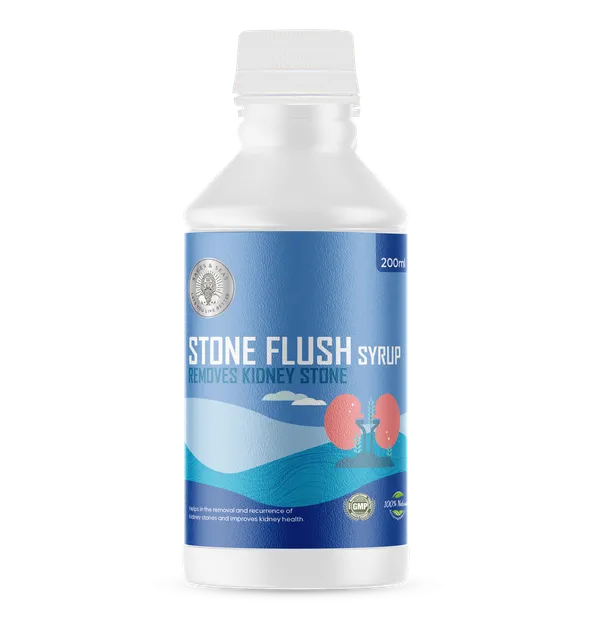

Stone Flush Syrup 200 Ml
₹424.15
₹499
15% OffFinal Price inclusive of all taxes
Cash on Delivery
Free Delivery
Get it delivered in 3-6 days
size
200 ml
Product Information
Pack Of
Pack of 1
Product Type
Ayurvedic Kidney Care Syrup
Ideal For
Men & Women
Usage
Kidney Stone Flush & Urinary Tract Health
Country Of Origin
india
Brand
Herbs and Hills
Product Description
What is a Kidney Stone?
Kidney stone or kidney stones- is a kidney or urethral disease in which small or big stones are formed inside the kidney. Mankind has been afflicted by urinary stones since centuries dating back to 4000 B.C.
This condition is usually found in people aged between 30 and 60 and is four times more likely to occur in men than women.
1 in every 10 Indian family will have someone suffering from this painful condition.
Types of Kidneys Stones
Based on variations in mineral composition and pathogenesis, it is classified into five types as follows.
Calcium Stones:
Calcium stones are predominant renal stones comprising about 80% of all urinary calculi.
Struvite or Magnesium Ammonium Phosphate Stones
Struvite stones occur to the extent of 10–15% and have also been referred to as infection stones and triple phosphate stones.
Uric Acid Stones or Urate
This accounts approximately for 3–10% of all stone types.
Cystine Stones
These stones comprise less than 2% of all stone types. It is a genetic disorder of the transport of an amino acid and cystine.
Drug-Induced Stones
This accounts for about 1% of all stone types.
What Causes Kidney Stones
Inadequate intake of fluid
Persistent bladder infection
Prolonged bedrest
Genetics
Inflammatory bowel disease
Gout
SYMPTOMS
Pain in back abdomen and groin
Frequent painful urination
Nausea
Vomiting
Blood in urine
Fever
Unhealthy urination
What are the solutions?
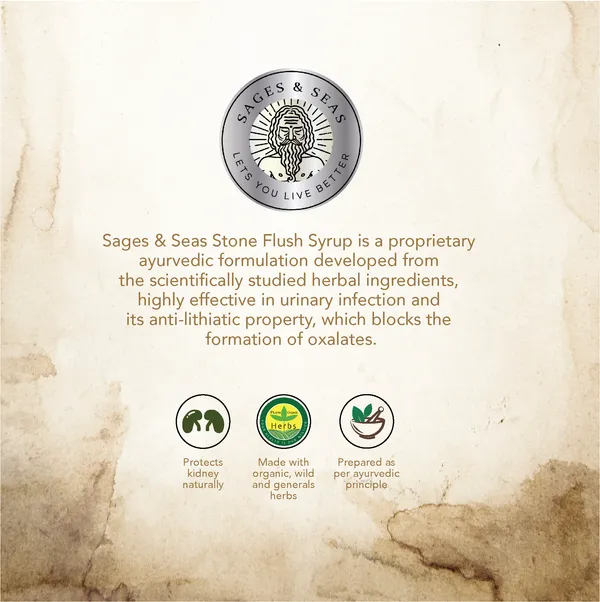
Sages and Seas Stone is proprietary ayurvedic formulation developed from the scientifically studied herbal ingredients, highly effective in urinary infection and its anti-lithiatic property, which blocks the formation of oxalates in urinary stones.
What are the key features?
Made with organic, wild and generals herbs
Prepared as per ayurvedic principle
Protects kidney naturally
[split_description]
img {
border-radius: 50%;
border: 1px solid rgba(0, 0, 0, 0.16);
box-shadow: rgba(0, 0, 0, 0.16) 0px 0px 6px;
width: 85px;
height: 85px;
}
ul.woodmart-list li .list-content {
max-width: calc(100% - 125px);
display: inline-block;
vertical-align: middle;
text-align: left;
padding-left: 10px;
color: rgb(29, 29, 29);
font-size: 13px;
}
@media(max-width:600px) {
#my-tab ul.tabs li {
width: 100%;
float: none;
display: block
}
#my-tab ul.tabs,
#my-tab ul.tabs li {
height: auto
}
}
-->
$(document).ready(function() {
$("ul.tabs").each(function() {
var t, i, a = $(this).find("a");
t = a.first().addClass("active"), i = $(t.attr("href")), a.not(":first").each(function() {
$($(this).attr("href")).hide()
}), $(this).find("a").click(function(a) {
return t.removeClass("active"), i.hide(), t = $(this), i = $($(this).attr("href")), t.addClass("active"), i.show(), !1
})
})
});
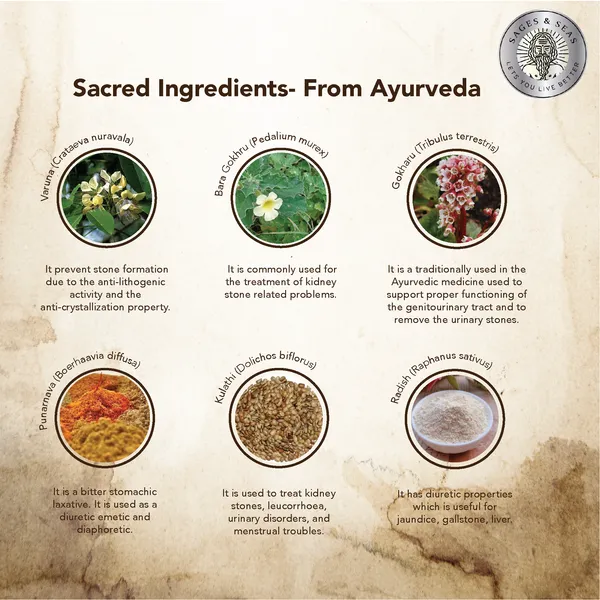
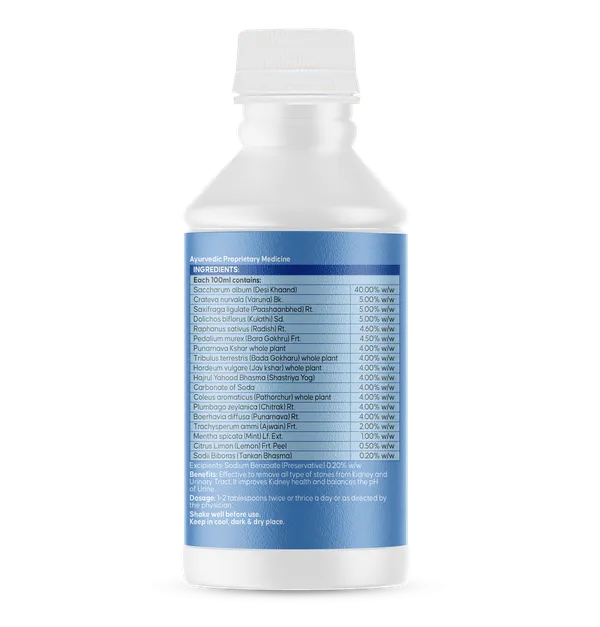
Key Ingredients
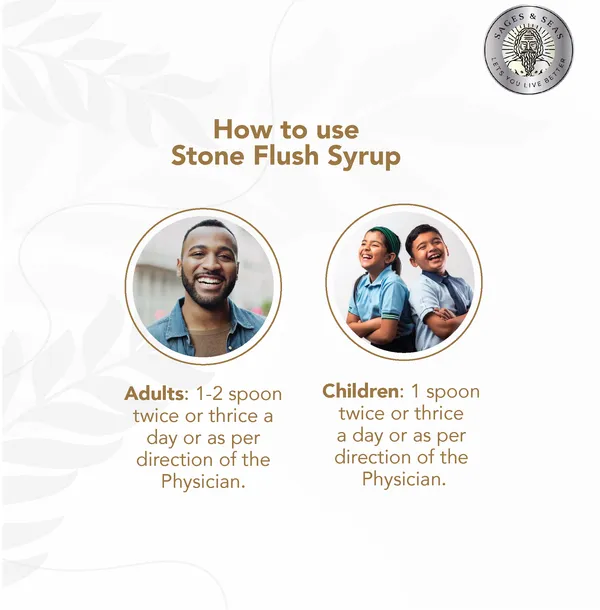
How To Use
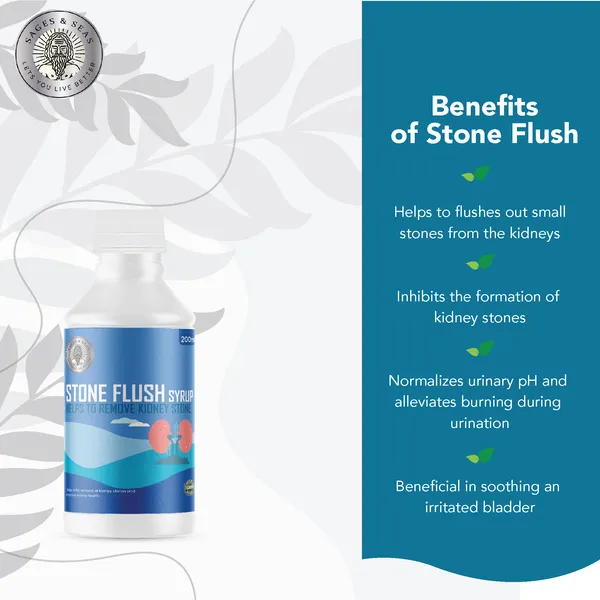
Benefits
Varuna (Crataeva Nuravala)
Bara Gokhru (Pedalium Murex)
Gokharu (Tribulus Terrestris)
Punarnava (Boerhaavia diffusa)
Kulathi (Dolichos biflorus)
Radish (Raphanus sativus)
Adults: 1-2 spoon twice or thrice a day or as per direction of the Physician.
Children: 1 spoon twice or thrice a day or as per direction of the Physician
• Helps to flushes out small stones from the kidneys• Inhibits the formation of kidney stones• Normalizes urinary pH and alleviates burning during urination• Beneficial in soothing an irritated bladder